
What is bioregionalism?
Learning the place you actually live, and organizing your life around caring for it.
A bioregion is a place defined by its living systems: watersheds, soils, plants, weather, and the animals and people who depend on them. Its edges follow the land, not county lines or city limits.
Most of us live in an address, not a place.
We know our zip code but not our watershed. We can name the highway but not the creek it crosses, the aquifer under our feet, or the oak that shades the yard.
Bioregionalism is a gentle correction. Once you know where your water comes from and where it goes, caring for it stops being abstract. It becomes something neighbors do.
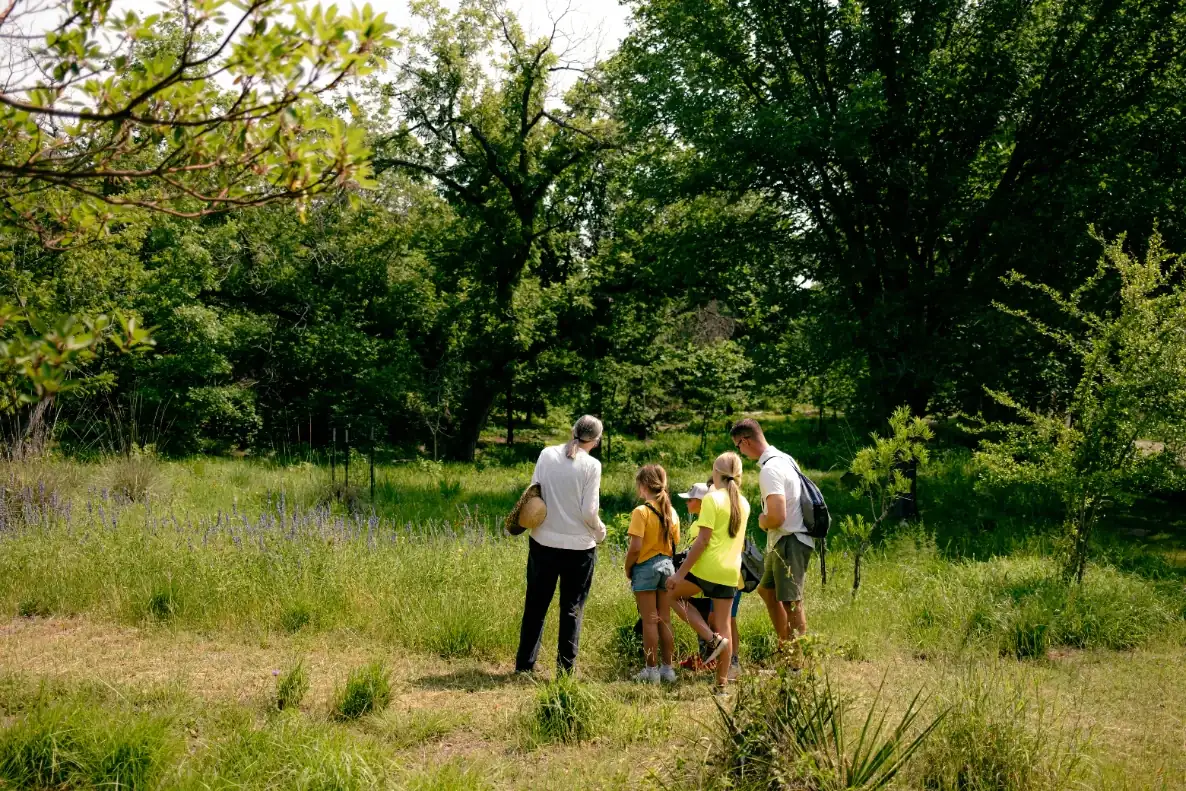
Four things to know about Balcones Tejas
Limestone and deep soils
Fractured limestone karst to the west and north, rich clay prairie soils to the east and south. Two geologies, one region.
Springs to the Gulf
Springs from the Edwards and Trinity aquifers rise along the escarpment and feed the creeks and rivers that run east to the Gulf.
Prairies and savannas
Live oak savanna, cross timbers, blackland prairie and post oak woods. Habitat we can restore, one yard at a time.
The escarpment
The Balcones fault line, where the karst uplands meet the prairie lowlands.
What the club does
Learn the place
Creek walks, plant walks and talks that teach you to read the landscape instead of just looking at it.
Upcoming gatheringsTend it together
Restoration plots, rain gardens and seed swaps: small, hands-on stewardship, pinned to the map.
Projects on the mapTell its stories
A growing archive of essays, oral histories and film, so the memory of this place isn't lost.
Read the storiesStart with the map.
Find your zone and see what neighbors are working on, or come out to a gathering.